From Brain Cells to Honeybees: A Conversation With Leonard Foster at HUPO 2025
How is proteomics helping to uncover links between the environment and health?
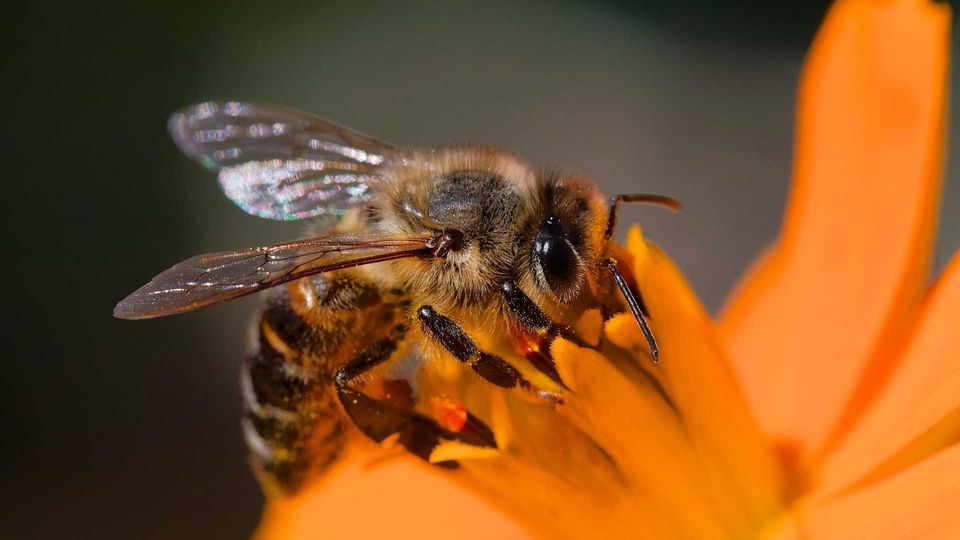
At HUPO 2025, Dr. Leonard Foster, professor of biochemistry and molecular biology and director of the Life Sciences Institute at the University of British Columbia (UBC), sat down with Technology Networks to discuss how advances in single-cell proteomics are helping to decode astrocyte diversity and why thinking across systems, from brain cells to honeybees, is key to understanding health.
For Foster, studying the brain’s star-shaped support cells, astrocytes, is an opportunity to address some of the toughest questions in proteomics today. His lab at UBC focuses on quantitative proteomics, developing methods that can capture the molecular details of individual cells and reveal how they respond to things such as infection and stress.
“Astrocytes are a type of cell that's found in the brain,” Foster explained.
“They're very widely dispersed in all different kinds of mammals, certainly invertebrates, and they perform a lot of different functions. We call them astrocytes as a collective, but they're better thought of as a very heterogeneous group of different cell types that we haven't really learned to distinguish yet.”
In his opinion, their cellular heterogeneity and involvement in many physiological functions make astrocytes both fascinating and difficult to study. “They perform immune functions, metabolic functions, housekeeping functions in the brain, supporting the activity of neurons and other neuronal cells,” he said.
The cells’ heterogeneity makes them particularly suited to single-cell analysis: “Single-cell analysis, where we can look at what each cell is doing and how each cell is responding to stimuli, makes astrocytes a really good model for developing and then applying single-cell proteomics and single-cell metabolomics.”
“There are quite large sexual dimorphisms in astrocytes between males and females, in particular, how they respond to viral infections,” noted Foster. “That’s the system that we've homed in on, looking at male versus female astrocytes and the heterogeneity within that, just in sort of baseline conditions, and then also how those different subpopulations respond to viruses.”
Achieving single-cell precision with inkjet technology
Pursuing single-cell proteomics for challenging cells requires rethinking each step of the experimental process. For Foster, one of the biggest hurdles has been finding a way to isolate individual cells and prepare them for mass spectrometry without losing precious material.
“It starts with figuring out how to physically get an individual cell into a well of a plate, so that we can then do the proteomic extractions,” he explained. Astrocytes’ diversity makes this problem even trickier: “That’s been one of our hurdles ‒ trying to figure out which particular conditions work best for cells of a given size and shape.”
He continued: “Astrocytes are heterogeneous, so there are different sizes and shapes even within that group of cells. That means, no one system seems to work perfectly with no biases.”
While several creative approaches have been developed for isolating individual cells, Foster pointed out that most of these are not compatible with downstream mass spectrometry.
“There are many different methods that have been developed for single-cell RNA sequencing to get one cell into something… but virtually all of those methods and instruments do things to the samples that make them incompatible with downstream mass spectrometry,” he explained.
“For example, approaches that use emulsions can lead to too much lipid in the sample, obscuring any signal you might get from your proteins using mass spectrometry.”
To tackle this problem, his team turned to a slightly less conventional approach that uses inkjet printing technology to deliver single cells directly into wells. While these systems work well, Foster noted that performance can vary between cell types because of differences in size and shape.
“One of the devices that we use was actually developed by Hewlett-Packard originally and builds directly off of their expertise in inkjet printing,” Foster said. “You have little spurts of liquid, where you can control the volume used to aliquot your liquid into individual wells. And if you have a way to detect, at the printer’s nozzle, whether a droplet contains a cell or not, then all of a sudden, you have a way of spitting out a droplet of liquid that allows you to dispense an individual cell into the well of whatever plate you're using. You can then repeat that process across all of your plates.”
Once the cells are isolated, every step counts. Foster explains that there are several challenges to be aware of at this stage. The first is sample processing. Specifically, the various steps needed to extract the maximum amount of protein, lipid or metabolite from a single cell and transfer it into a mass spectrometer with minimal losses.
Foster noted that “the final hurdles are getting the mass spectrometer as sensitive as possible… and then lastly, we find data analysis is the rate-limiting step, as it very often is in these big omics studies”.
Redefining what “quantitative” means
In proteomics, Foster explained, there’s an important balance between qualitative and quantitative insights. Qualitative approaches help to identify the specific proteins involved and how they differ between conditions (e.g., healthy and diseased states) while quantitative methods measure the extent of those differences, providing deeper insights that drive cellular functions and change.
“Throughout my career in proteomics, I've always been pursuing more quantitative methods,” he said. “Now, I kind of hedge there, because some people consider only absolute quantitation ‒ where you know the number of copies per cell or the micrograms of an analyte per milliliter of plasma ‒ to be truly quantitative, but I don't think that's true.”
For Foster, the relative changes often matter more than absolute numbers: “You can quantify that one sample has twice as much of something as another sample. You might not know how many copies there are per cell, but in a lot of biology, that's not really relevant, because you probably don't even know how many cells there are.”
While it’s possible to calculate copies per cell if you’re working at the single-cell level or know the exact cell count, Foster notes that this isn’t always relevant in physiological systems. “For most biology, relative quantitation is really the most important thing,” he explained. “For example, you’ve got whatever three times here, what you have there.”
“For understanding just about any biological paradigm, I think that quantitative knowledge is crucial. The qualitative knowledge, so just knowing if something's present or not isn’t enough,” Foster added.

Ask the Expert: Organoids
In this interactive Ask the Expert session, Dr. Soumita Das will answer your questions on how organoid technologies are driving research advances in cancer, neuroscience, and infectious disease.View Ask Me Anything
Realizing the power of integrated omics
When asked at HUPO 2025 which emerging themes stood out and what he saw as the most exciting directions in the field, Foster said: “I think single-cell proteomics, and its combination with other omics approaches such as single-cell multiomics ‒ typically proteomics plus lipidomics or metabolomics ‒ is going to completely dominate the field for the next several years.”
Foster noted that single-cell proteomics is still advancing rapidly, with much of the current research focused on refining technology. Over the next few years, he expects these methods to advance enough to drive deeper insights into biological systems.
Appreciating the bigger picture
In addition to his work on astrocytes, Foster has devoted much of his career to studying honeybees ‒in fact, that was the focus of his talk at HUPO 2025.
“My lab has studied honeybee health for about 20 years,” he said. “We got started just as honeybees started dying at unprecedented numbers, around 2007.”
He explained that this research has been generating real “buzz”, driven by “an increased recognition that the things that humans are doing to either the environment or to our agricultural systems are having an impact beyond just controlling weeds or whatever it is in a crop system.”
The deeper message he was alluding to was about the value of a holistic view of health and biology. “The pesticides that we're applying are affecting pollinators such as the honeybee, which in turn affects the quality and quantity of food we can grow,” he said.
Foster explains that it’s important to recognize “that environmental changes driven by human activity ‒ such as rising carbon dioxide levels ‒ feed back into the system and can affect pollinator health, with knock-on effects for food production”.
It’s clear that the connections between bee health, environmental change and human wellbeing are, for him, equally important.
“Viewing research as something that integrates all these different parts ‒ not just what’s happening in our own bodies, but also in the environment, other animals and crops ‒ helps us better understand human health and, ultimately, the future of humanity,” concluded Foster.
With thanks to Gustav Ceder, who conducted this interview on behalf of Technology Networks during HUPO 2025.